Nothing Performs Like Chemtronics

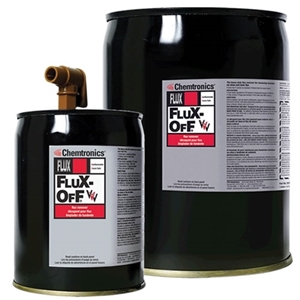
Flux-Off Tri-V

The Ultimate n-Propyl (nPB) Replacement

Flux-Off Tri-V Flux Remover is an extra strength nonflammable solvent that removes heavy and encrusted flux deposits. This solvent system is engineered to remove all types of flux types while evaporating quickly and leaving no residues. Tri-V replacement chemistry is an innovative new chemistry that does not contain any n-propyl bromide, TCE or any ozone depleting compounds.

CLICK HERE FOR FLUX REMOVER SELECTION GUIDE

Features & Benefits

  • Nonflammable, can be used on energized equipment
  • Powerful cleaning agent to remove R, RA, RMA, and synthetic fluxes
  • Removes encrusted fluxes and white residues
  • Penetrates to clean hard to reach areas
  • Evaporates quickly and leaves no residues, minimizes down time
  • Does not contain n-propyl bromide, trichloroethylene, or perchloroethylene
  • Stabilized for metals such as aluminum, magnesium, titanium, and brass
  • Noncorrosive, safe for sensitive metals

Applications

  • Chip Carriers
  • Heat Sinks
  • Metal Housings and Chassis
  • Printed Circuit Boards
  • Plugs
  • Relays and Contacts
  • Sockets
  • Surface Mount Device Pads
  • Switches

Vapor Degreaser Setting Guidelines

  • Boiling point – 118°F / 48°C
  • Boil sump temp set – 127°F / 53°C  
  • High solvent temp set – 136°F / 58°C
  • Refrigerant high temp set – 109°F / 43°C

Note: As with all vapor degreaser equipment and processes, observe all safety precautions, guidelines and operating rules associated with these units.  Failure to do so may put operations personnel at risk.  Avoid excessive vapor losses, loss of refrigeration, excessive boil sump heat, etc.  Make sure all equipment is operated in accordance with the manufacturer’s guidelines and instructions.  If in doubt, contact your manufacturer immediately.

Shipping Name - Cleaning Compound N.O.I.

Swipe to View Add to Cart Button 

Part # Size
VVV595

5 gal / 19 L container

VVV5595

53 gal / 200 L drum

Contact us for further details

FAQ's

How can you reduce chemical exposure?

Every organization using hazardous chemicals within their facility has the responsibility to equip their facility and personnel to maintain exposure levels below the TLV. Personal monitoring badges can be used to measure exposure of a specific material. Then, depending on the threshold limit and the application, exposure can be controlled with PPE like masks, face shields, respirators, and even coveralls. If they don’t reduce exposure below the recommended limit, you will need to consider a special ventilation hood or even containment booth. As you can see, as the exposure limit gets down to a certain level, the equipment required to safely use the solvent can get impractical. At that point, your best option is to consider a safer alternative.

How do you know the safe exposure limit of a degreaser, contact cleaner, or flux remover?

The personal hazard associated with a solvent is often defined using Threshold Limit Value (TLV), which is the recommended average exposure in an 8-hour day, 40 hour work week. The lower the TLV of a particular substance, the less a worker can be exposed to without harmful effects. TLV is stated on the SDS of chemical products, in additional to recommended personal protection equipment (or PPE). The threshold limit value of a solvent is generally set by the American Conference of Governmental Industrial Hygienists (ACGIH). The unit of measure is Parts Per Million (PPM). 

Are Tri-V cleaners good replacements for n-propyl bromide (nPB)?

Yes, Tri-V high performance solvent cleaners are nonflammable, powerful cleaners like nPB, safer than nPB, and are also economically priced.

How do I figure out the shelf life of a product?

The shelf life of a product can be found on either the technical data sheet (TDS), available on the product page, or by looking on the certificate on conformance (COC). The COC can be downloaded by going to https://www.chemtronics.com/coc. Once you have the shelf life, you will need to add it to the manufacture date for a use-by date. The manufacture date can be identified by the batch number. The batch code used on most of our products are manufacture dates in the Julian Date format. The format is YYDDD, where YY = year, DDD = day. For example, 19200 translates to the 200th day of 2019, or July 19, 2019. This webpage explains and provides charts to help interpret our batch numbers: https://www.chemtronics.com/batch-codes.

Articles

Vapor Degreasing Fluid Stability
Trans-1,2-Dichloroethylene/HFE Blends vs. Legacy nPB/TCE Chemistry Executive White Paper Executive Summary Modern stabilized trans-1,2-dichloroethylene (t-DCE)/HFE blend vapor degreasing fluids represent a fundamentally different stability category from legacy nPB, TCE, perchloroethylene, and met...
Read This Post

Tri-V Cleaning Solvent Performance Evaluation
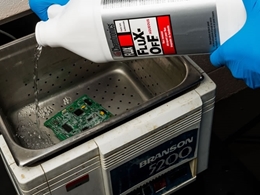
Qualifying a replacement cleaning chemistry can be a daunting task, as performance parameters are considered along with safety and regulatory issues.  Changes in the regulatory environment can force these changes, and unfortunately many substitute solvents do not match the performance and cost ...
Read This Post

Ultrasonic Cleaning: The Ultimate Guide
Ultrasonic cleaning equipment used with a solvent is a popular choice when companies in heavy industry, electronics, medical electronics, and aerospace industries need to aggressively remove stubborn soils. An ultrasonic cleaning process utilizes equipment to transmit ultrasound waves to break apart...
Read This Post

Ultimate Guide to Cleaning Electronics: Improve PCB Reliability Safely & Effectively
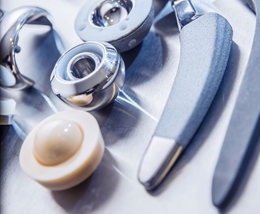
In the process of assembling, reworking, or repairing printed circuit boards (PCBs) for electronic devices, the discussion inevitably turns to whether or not to clean the PCB. Cleaning adds time and expense to the process, and doing it wrong can cause more harm than good. However, proper cleaning is...
Read This Post

Novec and Vertrel Solvent Replacement Cleaning Options for Medical Instrument and Implantable Devices

Supply chain shortages resulting from the reopening of businesses and lifting of COVID-19, among a myriad of other factors, have impacted the manufacture of medical implantable devices and surgical instrumentation. 3M Novec and Chemours Vertrel-based solvents, which are commonly used in the vapor de...
Read This Post

n-Propyl Bromide (nPB) Determined Unacceptable Risk by EPA for Vapor Degreasing & Aerosols
The US Environmental Protection Agency (EPA) has determined that n-propyl bromide (aka. nPB, 1-Bromopropane, 1-BP, CAS 106-94-5) “presents an unreasonable risk for 16 conditions of use” in an August, 2020 report. “Nontechnical Summary of the Risk Evaluation for 1-Bromopropane (n-Pr...
Read This Post

Ultimate Guide to Cleaning Electronics

In the process of assembling, reworking or repairing printed circuit boards (PCB) for electronic devices, the discussion inevitably turns to whether or not to clean the PCB. Cleaning adds time and expense to the process, and doing it wrong can cause more harm than good. This guide will walk you ...
Read This Post
You did not finish submitting your information to request a sample